

Today I am going to tell you a story about sucking. I am also going to tell you a story about suc… ceeding. But first I am going to tell you a story about sucking. OK? OK. Here we go.
Baseball in Israel was founded in 1986. Like most things, there is no real “beginning” for baseball in Israel. The exact timing and events are up for debate. People were playing softball on Kibbutzim in the late 70s, and someone put an ad in the local newspapers in the early 80s looking for players that said, “Where are you, Joe DiMaggio?” but for the purposes of this story, let’s pretend there was a beginning, and that beginning was 1986.
That is when a group of parents formed the Israel Association of Baseball. There was no great ambition. They just wanted a place for their kids to play ball. The IAB, as it’s still known, sent the first ever Israel national team to compete in an under-12 tournament in Germany. The team stayed with a Rabbi on the air force base in Ramstein and wore mismatched hats and jerseys. In their first ever game, Israel played Saudi Arabia, of all counties, a team full of American kids living on military bases, and lost 54-0. Now that is a remarkably humble, shitty beginning. There’s an article in the LA Times about the game. Look it up.
And it continued this way for twenty years, a few American families who had moved to Israel shuffled positions on the board of directors from president to treasurer to third base coach and assembled national teams each summer to travel to Europe and represent Israel and lose baseball games. This is a story about sucking, and make no mistake, suck we did.
Then, in 2007, there was an attempt to bring professional baseball to Israel. Finally, after [only] twenty years wandering the dessert, a savior. A business man from Boston named Larry who made a fortune selling holeless pre-stuffed bagels to the United States military decided he was going to spend his fortune bringing baseball to Israel. American Jews liked baseball, Larry thought, so will Israelis. But Larry underestimated just how different American Jews and Israelis are, and the league was a disaster. No fans. No facilities. There was a strike when the league stopped paying the players. And Larry was legally held in Israel after the one and only season of the Israel Baseball League because he owed so many people money. The league nearly ruined Larry’s life. But for some of us, the league was not a total failure. I played third base for the Tel Aviv Lightning in the IBL, and it started a chain of events that are still unfolding today.
In 2006, around the same time Larry brought the IBL to Israel, Major League Baseball started a tournament called the World Baseball Classic. It was going to be the World Cup for baseball. Japan won the first tournament. They had it again in 2009. Japan won again. In 2012, they invited 16 news teams to attempt to qualify for the tournament. Israel was one of them.
Why, you may be asking, would a country with virtually no baseball program be asked to participate in the best baseball tournament in the world? It is a reasonable question. The answer is… because we didn’t have to use Israelis. Americans could play on the team. The WBC has something called the heritage rule so anyone of Jewish descent could play on the team - suddenly, we had access to Brad Ausmus and Shawn Green and Gabe Kapler, and, amazingly, they said “yes” to playing and coaching. Finally, Israel Baseball would suck no more. We had Major League talent. We couldn’t lose, right? But, we did lose, to Spain, in the final game of the qualifier, and we didn’t make it to the main tournament.
Let’s quickly review the sucking….
A weak domestic program and a national team competing in the C-Pool, the lowest level of baseball in Europe, maybe the lowest level of baseball anywhere in the world.
A failed attempt at a professional league.
A failed attempt to qualify for the WBC despite having the best team on paper, by far.
Strike one. Strike two. Strike three. It was over. We sucked, and moreover we were doomed to sucking, forever.
After the WBC qualifier I was offered the job to move to Israel and become the executive director for the Israel Association of Baseball. I received the honor of becoming the first full-time employee in baseball in Israel, taking over a thirty year old dysfunctional failing organization. I am not sure if they thought I was uniquely qualified for the job or the only person who would take it, but I packed my bags and started my new life as an Israeli. I made aliyah. I lived in an abandoned shoe store in Jaffa. I coached. I played. I umpired. I delivered pants and gloves and helmets to any child in need.
This period, whether we knew it or not, represented the turning point, the bridge from sucking to succeeding. If this were a film, this is where we would see a montage of me driving all over the country getting lost and going into elementary schools to use my bad Hebrew to try to explain what baseball was to half-interested Isaeli kids, “Kadur Basis”. And it worked, sort of. Enrollment grew, we started a baseball academy recognized by Major League Baseball for the best players in the country, and we started a coexistence program for Arab Israeli and Jewish Israeli kids to play together call, Baseball Le’Kulam, that I will always be proud of.
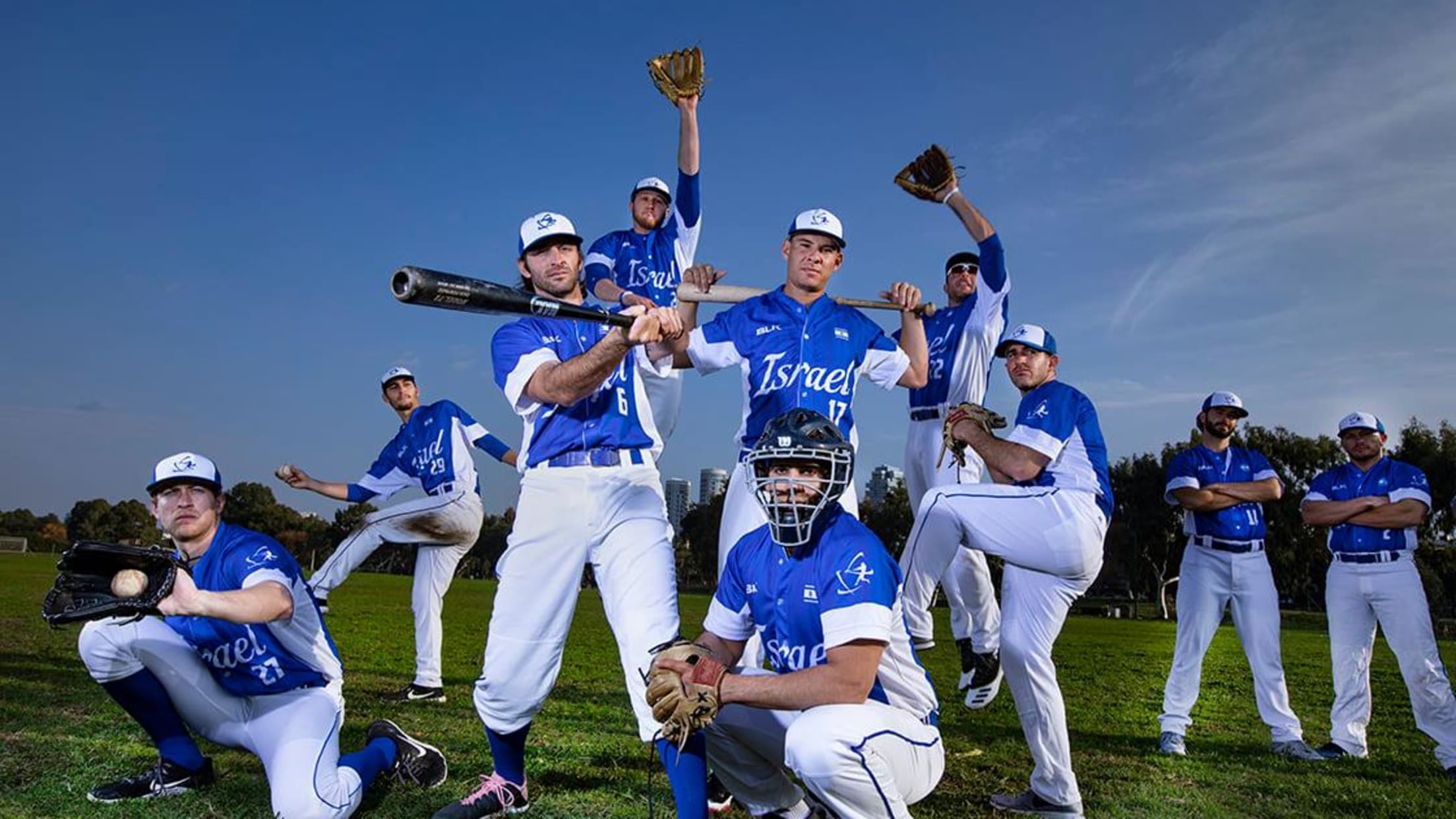
After three years in Israel, in 2016, somehow MLB invited us to qualify for the World Baseball Classic again. And this time, we did it. We won the qualifier and went to the 2017 World Baseball Classic in Kore. In Korea, we won the first round, a million dollars in prize money, and flew to Japan for the second round. In Japan we beat Cuba to improve to 4 and 0, and eventually lost to two-time champs Japan in the Tokyo Dome in front of 55,000 people. Suddenly, we were on the scene. We were the scene. ESPN called us the Cinderellas of the tournament.
Two years later, we went on another improbable winning streak. Israel was now playing in the B-Pool of European Baseball. The summer of 2019, we won the B-Pool, moved up to the A-Pool, finished in the top-four in the A-Pool, moved on to the Olympic Qualifier, and won the qualifier becoming one of only six teams in the world to make it to the 2020 Tokyo Olympics. We were going back to Japan. We were going to the Olympics.
The Olympics were postponed a year because of Covid, so the summer of 2021, the little organization started by a few parents who just wanted their kids to have somewhere to play ball walked into opening ceremonies of THE Olympic Games. We did not win a medal, but we beat Mexico and became the first Israeli team to win a game at the Olympics since 1968.
A month after the Olympics, it was time for the A-Pool again. But everyone had the post-olympic blues - no one wanted to play. I had been promoted to manager following the Olympics. Again, I wasn’t sure if they thought so highly of me to make me manager or if they couldn’t find anyone else to do it after our manager Eric Holtz resigned. We could only find 16 players, some were teenagers, some were in their 40s and hadn’t played in years. I hoped in my first tournament as manager to just not get relegated back to the B-Pool. But we won five games in a row and left Italy with silver medals hanging around our necks. Another miracle.
OK. So let’s review the suc…ceeding.
A 5th place finish at the 2017 WBC.
An appearance at the Olympics.
A silver medal at the Euros.
We had done it. We had officially had put the suck in succeed. In just four years, our world ranking had improved from 47th to 19th. We even had fans.
This is no doubt an incredible story. There are lessons to be learned about failure, grit, and the long-arc of seeming overnight success. But the real question that lingers here is… Why does any of this matter? It matters for me, of course, I got to go to the Olympics. It is my life, and my career. But why does it matter in general? Why should it matter to anyone besides me? Why should it matter to you? And the answer may surprise you….
It doesn’t.
Israel Baseball does not matter for its own sake. It only matters if people all over the world turn on their TVs and see us walking into opening ceremonies and realize Jews are not the invisible demons of their imagination. It matters for a kid whose family just moved from New Jersey to Jerusalem who needs to play baseball to feel normal and make friends. It matters for a minor-leaguer who has never had a Jewish teammate who is suddenly in a clubhouse of people like him for the first time in his life. It matters for a kid in Toronto or Houston who is scared to tell people he’s Jewish until he proudly puts on his Israel Baseball hat. It matters if people matter. It matters if anything matters and for the same reason anything matters. It matters because it changes people’s lives.
I know it changed mine.